After the Debates, What Comes Next?
It is wonderful that over the last few decades, a wave of new thinking has swept through our field. It was invigorating, at least at first, but somewhere along the way we made camp on islands of theoretical purity and forgot to build bridges between those islands. We developed allegiances. We talked about Safety Differently, Human and Organisational Performance (HOP), Behaviour-Based Safety (BBS), and the Traditional WHS model as if they were nation states, football teams or political parties. You were either “old school” or “new view.” Either you believed in systems or in behaviours. Either you stood for compliance or for curiosity. We revelled in a series of false binaries.
Somewhere along the line, models became identities.
People who had been trained in behaviour-based safety felt dismissed as “old-school.” People who embraced Safety Differently were accused of being soft on accountability. Some WHS professionals clung to regulatory frameworks like a life raft, while others rejected them entirely as bureaucracy.
What should have been a cross-pollination of ideas became, at times, a trench war of ideologies and in that process, practical integration suffered.
In client boardrooms, I’ve heard executives say they were “doing HOP now” as if it required abandoning hazard registers. I’ve seen frontline teams disengage because behavioural observation programs were quietly shelved—not because they didn’t work, but because they were “out of fashion.” I’ve watched investigations veer away from behaviour entirely, even when human error was clearly a contributing factor and opportunities to re-design work were missed.
In each case, something valuable was left on the table, not because it didn’t work, but because it belonged to the “wrong” model.
We can do better than that.
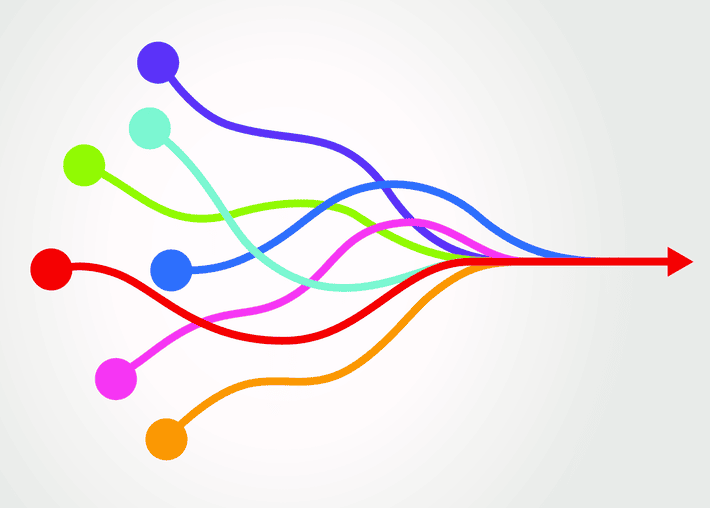
This article is about recognising that every model brought something important to the table and that integration, not ideology, is how the profession moves forward.
Four Models, One Goal: A Brief Recap
There’s probably more models and I may have done each of them a disservice with my summaries but at least in my mind these are the key ones..
- Traditional WHS Management focuses on hazard identification, risk control, and strict compliance with regulatory requirements. It views safety as the absence of harm and sees procedures as the backbone of safe operations.
- Safety Differently flips that script. It treats people as the solution, not the problem, and seeks to build adaptive capacity by reducing bureaucracy, listening to workers, and measuring the presence of positive capacity—not just the absence of negatives.
- Human and Organisational Performance (HOP) shares many values with Safety Differently but focuses more directly on learning from normal work, recognising that error is normal, blame fixes nothing, and context drives behaviour.
- Applied Behavioural Science (ABS) draws from psychology and behavioural economics. It focuses on what people do, what reinforces or discourages those behaviours, and how to shape behaviour through observation, feedback, and data. We experience it as behavioural safety programs.
All four frameworks emerged in response to real gaps in safety thinking. All have demonstrated value. None are complete on their own.
The Complexity of Work Demands Integration
Safety work does not happen in a vacuum. It happens in hospitals and near powerlines, in board rooms, logistics depots and ageing social housing units, on remote highways and in frontline community services. It happens in complex systems filled with fallible humans, shifting priorities, and imperfect information.
In that kind of environment, no single model will do.
Traditional WHS is essential when we’re dealing with clearly defined hazards and regulatory requirements, especially in high-consequence industries. But it can be bureaucratic and blind to nuance.
Safety Differently helps us see work as it’s actually done and restores dignity to workers. But it can struggle to scale or get traction without committed leadership.
HOP gives us powerful learning tools and reframes error as a system insight. But it’s often misunderstood as soft on standards.
ABS gives us a data-driven, scalable way to influence behaviour and embed positive habits. But it can become overly focused on individuals if we forget the systems that shape behaviour.
Taken together, these models provide balance. One covers what the other misses. They speak to different layers of safety, structure, system, culture, learning, behaviour. Real-world safety management demands we draw on all of them.
A False Binary: Learning vs Compliance
One of the most persistent false choices in modern safety discourse is the supposed divide between compliance and learning. We are told we must choose: do we want a culture of control, or a culture of curiosity? But I reject the premise of that question.
Safety leaders know that we need both. We need systems and rules that protect people from known risks and we also need the agility to respond to novel situations. We need compliance to meet to demonstrate that we meet our duties of care. We need learning to adapt, improve, and innovate.
Take electrical work. A clear isolation procedure is non-negotiable. But so is learning from the way workers adapt it in the field when equipment doesn’t align with the diagram. If you ignore either, you increase the risk. Instead of asking, “Should we focus on learning or compliance?”—we should ask, “How can we design systems that are both clear and adaptable? That are legally sound but still responsive to the people doing the work?”
That’s what integration offers.
What Integration Looks Like in Practice
Integration doesn’t mean blending all the models into a theoretical smoothie. It means practical alignment—using the right tool at the right time, for the right purpose.
Here’s how that might look:
- When designing a high-risk procedure, you use traditional WHS tools (risk assessments, SWMS), but also consult workers to make sure the procedure reflects real work (Safety Differently) and conduct behavioural observation trials to ensure it’s easy to follow (ABS).
- When an incident occurs, you use a HOP-informed learning team to explore context and system drivers, but also map out behavioural precursors, using ABC analysis from behavioural science, and check for any regulatory compliance gaps.
- When measuring performance, you don’t just look at lag indicators (TRIFR, LTIFR). You also track leading indicators from ABS (safe behaviour frequency), worker engagement metrics (Safety Differently), and organisational resilience markers (HOP).
Each model strengthens the others. Integration helps us see the whole picture—not just the part that fits our favourite lens.
Hypothetical Scenarios: Integration in Action
Retail Warehouse Near Miss (Fast-Paced Environment)
A worker narrowly avoids being struck by a reversing forklift. No contact—but it’s a close call.
- WHS: Exclusion zones were marked, but pallets had spilled into walkways.
- HOP: The operator had been “nudging” the line for weeks due to tight timeframes and reduced staff.
- ABS: Spotters were inconsistently used. Feedback culture was weak.
- Safety Differently: Workers had long known the layout was flawed but had stopped reporting it after no action was taken.
The organisation:
- Redesigns the layout with input from workers (SD).
- Reinforces behavioural expectations using daily check-ins and reinforcement schedules (ABS).
- Trains leaders on how to respond constructively to reports (HOP).
- Conducts a compliance check across all zones (WHS).
Risk is reduced—because learning, behaviour, and design all improved together.
Healthcare Fatigue Event (Complex Human System)
A nurse administers the wrong medication late in a double shift. The patient survives, but the error is serious.
- HOP: The system relied on memory for a complex dosing process, despite well-known fatigue risks.
- ABS: There were no prompts or visual cues at the medication station. The nurse was not reprimanded for the error but also received no coaching.
- WHS: The procedure existed, but was 12 pages long and rarely followed.
- Safety Differently: The nurses had developed their own “cheat sheets” to simplify the task—but this was not acknowledged by management.
The response?
- Introduce simplified dosing guides and better labelling (WHS + ABS).
- Recognise the frontline workaround as a valuable adaptation and bring it into policy (SD).
- Use the event to explore system pressures and address shift design (HOP).
- Engage the broader team in dialogue about fatigue and cognitive load.
Here, too, each model adds a different layer of insight.
The Role of Leadership: Curiosity, Humility, and Strategic Blend
Safety leadership in an integrated model is not about memorising philosophies. It’s about:
- Asking better questions (“What’s influencing this behaviour?” “What does this tell us about our system?”).
- Tolerating ambiguity (“There may not be a single root cause and that’s okay.”).
- Modelling humility (“We don’t have to be right. We have to get it right.”).
When leaders stop looking for the “one true model,” they create room for new insights. They allow multiple truths to co-exist—and in doing so, create a culture of shared purpose rather than model-driven division.
Integration as a Marker of Professional Maturity
As professionals we often find ourselves clinging to some because they offer clarity, because they help us learn and they help us find our tribe. We’ve all done this, it’s normal, natural and in someways baked into us as humans. However we also have the capacity to learn, grow and apply more mature thinking. That maturity brings something important: the ability to synthesise.
We’ve reached the point in our profession where we no longer need to argue about whether behaviour matters more than system design, or whether procedures are more important than psychological safety.
We need to say: yes, and…
Yes, we need clear expectations.
And we need systems that make the right thing easy.
Yes, we need to reinforce safe behaviour.
And we need to design out the conditions that create errors.
Yes, we need workers to comply.
And we need to listen when they say the rules don’t match reality.
Integration isn’t a compromise. It’s a sign that our field is growing up.
From Theory to Capability
Most other high-consequence professions have already gone through this evolution.
In medicine, doctors combine clinical guidelines (tradition), with patient-centred care (human factors), root cause analysis (HOP), and nudging techniques (behavioural science). In aviation, pilots use checklists (ABS), human factors training (HOP), engineering controls (WHS), and debriefs (SD) to build layers of safety.
Why would safety professionals be any different? We are practitioners, not philosophers. Our job is not to defend models. Our job is to prevent harm. That means becoming less attached to our theories and more focused on our capability.
What We Gain by Integrating
When we stop arguing over frameworks and start combining them with intelligence, we get:
- Fewer blind spots.
- Stronger investigations.
- More usable procedures.
- More meaningful conversations.
- Better board engagement.
- Richer data.
- Safer work.
We also get a profession that is more confident, more respected, and more focused on what matters.